The Group 4 Science Projects – Class of 2017
IB高二 Group 4科学实验项目
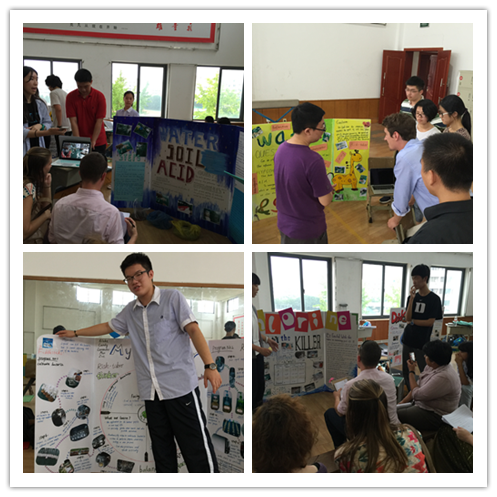
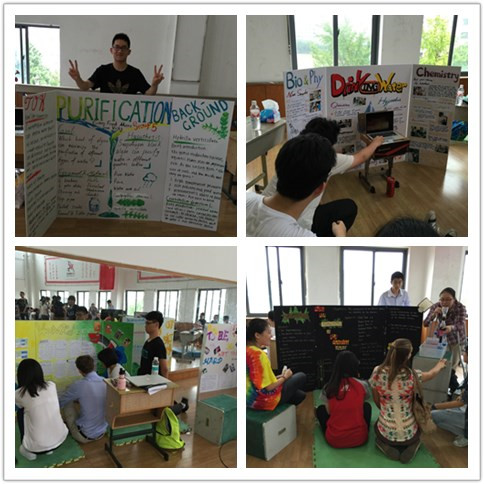
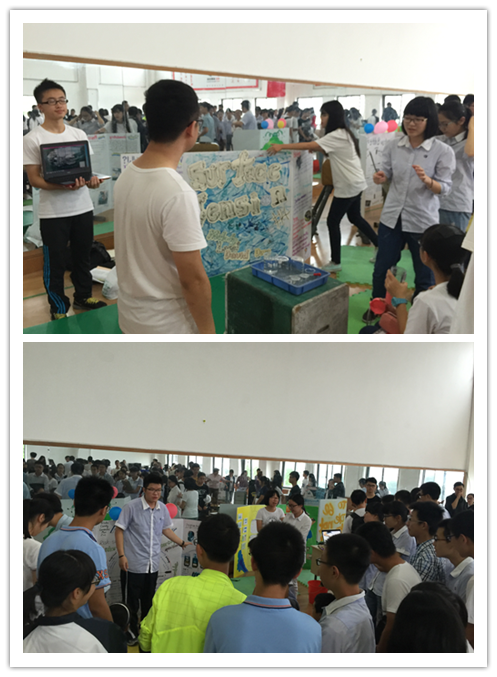
The dates of 23rd, 24th and 25th September were an exciting fixture in our Science Calendar as students from IB1 were engaged in the annual Group 4 Projects. During this time the IB1 students were taken off-timetable to learn, share, practice and showcase their Science prowess.
9月23、24、25这三天对于我们科学学科是非常重要的日子,因为IB高二的学生将开展一年一度的Group 4科学实验项目活动。在这段时间,IB高二学生将走出课堂,学习、分享、实践、展示他们的科学技能。
The IB group 4 project is a collaborative activity where students from different Science Subjects work together (within a group) on a scientific topic, allowing for concepts and perceptions from across the disciplines to be shared. The aim of the projects is to “develop an understanding of the relationships between scientific disciplines and their influence on other areas of knowledge”. It also allows students to appreciate the environmental, social and ethical implications of science and technology, at the same time allowing them to understand the limitations of scientific study.
IB中心的Group 4项目是一个团队合作的活动。选修不同科学学科的学生组成一个团队就一个科学主题进行展开,从而使跨学科的概念、观点得到分享。这个项目的宗旨在于“理解科学各学科的关系以及它们对其他领域知识的影响”。它还促使学生去了解科学在环境、社会和伦理方面的应用。同时也帮助他们认识科学研究的局限性。
The program for the 3 days offers students an opportunity to;
时长三天的项目让同学们有机会做到:
· Work within a diverse group of students from different backgrounds
· 与来自不同科学背景的学生在一个组里相互合作
· Ask a question or identify a problem from a topic (This year the topic was water)
· 提出研究问题或从一个主题中锁定研究课题(今年的主题是水)
· Design, and carry out an investigation that answers the question or solves the problem
· 设计实施一个能够回答研究问题的实验
· Use knowledge and skills from Biology, Chemistry and Physics
· 综合运用生物、化学、物理三门学科的知识和技能
· Collect and analyze data
· 收集和分析数据
· Design a display board with skills they learnt from Art
· 运用美术学科的知识设计一个展板
· State how their project embodies the IB Learner profile (Reflective, Open minded, Risk takers, Caring, Balanced, Principled, Knowledgeable, Inquirers, Communicators, Thinkers)
· 阐述他们的设计是如何反映IB学习者特征的(会反思、无偏见、敢挑战、有同情心、会权衡、有原则、有见识、常发问、擅交流、会思考)
· Make TOK connections
· 联系知识理论课所学知识
· Use 21st century communication skills to share their findings to an audience that included Students, Teachers and Parents using good English.
· 应用21世纪交流技能把他们的实验结果分享给各个听众包括学生、老师和懂英语的家长。
Our students made excellent efforts in investigating different aspects of water. There was a huge variety of investigations, including;
我们的学生在研究水的不同方面表现相当不错,涉及到水的多方面性质的研究,包括:
Hardness of water, Water pH and soil loss, Water Filtration methods, Water Surface Tension, Acid Rain, Water Fountains, Freezing time and water concentration, Water and electrical conductivity, Chlorine and Water Quality, Comparing different brands of bottled water, Purifying water with Algae, Microorganisms in pond water, There was even a group that made a rocket using water and air!
水的硬度、水的PH值、水的过滤方式、水的表面张力、酸雨、水喷泉、水的凝结时间、水的浓度、水的导电率、氯和水的性质、对比不同品牌的瓶装水、利用池塘里的藻类和微生物净化水质,有一个小组甚至用水和空气做了一个火箭!
For students, the most exciting, at the same time, challenging aspects of the projects, is that they ask a question, or identify a problem that interests them the most. Further to that, they decide on the types of equipment or substances to use and design a unique methodology to find a solution. This is what makes the IB science program special. Students develop skills and knowledge to solve 21st century problems in an innovative and collaborative approach.
对于学生来说,最让他们兴奋的也在于这个实验项目给他们带来的挑战。他们需要提出一个研究问题,或者锁定一个他们最感兴趣的话题。之后,他们决定用何种实验仪器或者物质,设计一个独特的研究方法来寻找结果。这就是IB科学项目的独特之处。学生用一种创新和合作的方式来学习知识和技能从而其研究解决21世纪的难题。
Although, the skills and knowledge that students gained during the project are useful academically, other qualities have a wide application to lifelong learning. For example;
学生在这个项目中学到的知识和技能不仅在学术上颇有裨益,所获得的其他技能从终身学习的角度上看也有更广泛的应用。例如:
· Collaborative Skills – Ensures efficiency when solving a problem
· 合作力——确保在解决问题时的高效性
· Reflection – Sometimes if the initial plan does not work, you have to modify course or start all over again
· 反思力——有时候初次尝试的计划可能失败,他们需要调整策略重新来过。
· Innovation – If equipment does not work the way you intended, or not giving you the results you need, change the method or materials
· 创造力——如果实验仪器的作用不如预期,或者没有得出期望的结果,这就需要改变实验方式或材料。
· Patience is a virtue – capturing data can be a laborious process, waiting for results can be painful. Finding a creative way of doing it or filling the time by doing other things can help. Some students stayed in the lab until about 08:30pm
· 意志力——收集数据是一个相当艰辛的过程,等待实验结果更是煎熬。找到一个有创意的实验方式或者在等待过程中完成其他任务能起到帮助。有些学生甚至到晚上八点半还待在实验室。
· Time Management – each step of the process had to be completed within the stipulated time.
· 时间管理——实验中的每一步都需要在规定的时间内完成。
· Dealing with setbacks – ‘In the middle of difficulty lies opportunity’ – Albert Einstein
· 抗挫力——爱因斯旦说过“困难中往往暗藏机会”。
Judging students efforts was not focused only on the final product but, equally on the planning, execution and presentation. The emphasis of the group 4 project is thus, the journey, not the final product.
评判学生的表现并不局限于最终的实验结果,也同样落在他们的计划、执行和展示方面。Group4项目的重点在于过程而非最终的结果。
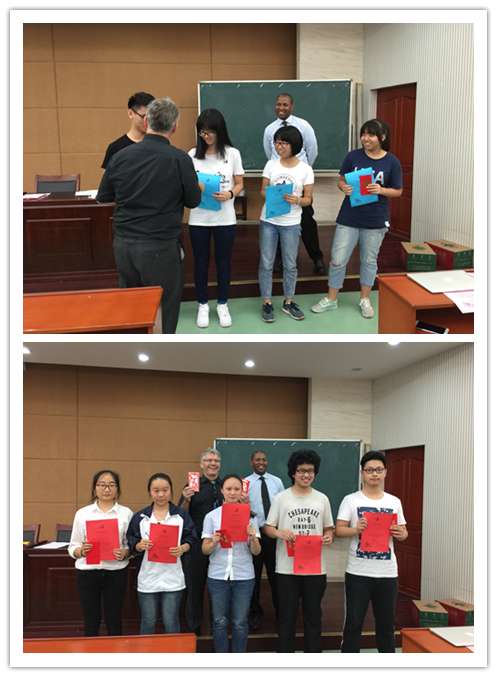
There was an awards ceremony where all students were awarded a participation certificate and the best 3 groups were awarded something a bit more special. At the end, students were visibly exhausted but there was a huge sense of accomplishment. As teachers we also hope that students fully experienced the joy of studying science.
活动结束后有一个颁奖典礼。所有学生都授予了参与证书,其中表现最好的三个小组得到的奖品比较特殊。最后,学生看起来都很疲惫但是脸上却又洋溢着成就感。作为老师,我们希望学生在这个经历中体会到学习科学的乐趣。
Well done to IB1, you guys did an amazing job!!!
高二IB的同学们,你们表现得很棒!
下面让我们来一睹同学们的风采:
文章作者:IB生物老师 Mr. Valashia
翻译:夏佳黛
白杨校区:宁波市白杨街178 东部校区:宁波市百丈东路1907号
教辅专项整治工作监督电话:0574-83062018
Copyright© 2001-2026 宁波效实中学 版权所有
浙公网安备 33020302000081号 浙ICP备10205169号


 微信扫码进入校友会


 全屏
全屏 二维码链接
二维码链接